Why Most Roofing Companies Fail to Hit the Top 3 Map Pack
In the high-stakes world of residential and commercial roofing, the difference between a calendar full of premium installs and a quiet office often comes down to three inches of digital real estate: the Google Map Pack. The reality of local search in 2026 is uncompromising. Statistics show that 97% of consumers search online for local businesses, and 46% of all Google searches carry a specific local intent. For roofers, this isn’t just a marketing metric; it is the lifeblood of the business. In most mid-sized American cities, monthly searches for roofing services exceed 5,000. This means roughly 167 potential customers are searching for your services every single day. If you aren’t in those top three positions, you are essentially invisible to 167 people who are ready to buy. Most roofing companies fail to hit this mark because they are playing by 2018 rules in a 2026 environment, relying on outdated google business profile seo tactics that no longer move the needle.
The “Blacklist” Reality: Why Roofing is the Most Suspended Industry in 2026
If you feel like Google has a target on your back, you’re not paranoid – you’re observant. As we move through 2026, roofing has officially claimed the title of the most heavily scrutinized and suspended industry in the Google Business Profile (GBP) ecosystem. The volatility of this niche is unprecedented. Because roofing is a high-ticket service often associated with “storm chasing” and lead-generation spam, Google’s automated filters are set to maximum sensitivity. Many contractors find themselves victims of “Google Business Profile Blacklisting,” where their profile isn’t just pushed to page two, but effectively shadowbanned or outright suspended without a clear explanation.
The primary reason for this is the industry’s reliance on aggressive, non-compliant tactics. Many agencies still attempt to game the system using virtual offices, keyword-stuffed business names, or low-quality PBNs. In 2026, these are the fastest ways to trigger a manual review. I have seen countless companies lose decades of review history overnight because of The Backlink Mistake That Gets Profiles Suspended or Shadowbanned. When you use a “cheap SEO” provider, they often use automated tools that create footprints Google’s AI can spot from a mile away. To survive in this vertical, your google business profile seo must be surgical, focusing on high-integrity data that proves you are a legitimate, local entity with a physical footprint. Without a clean, compliant profile, you aren’t just failing to rank – you are risking the permanent deletion of your digital storefront.
The Proximity Paradox: Why Being “Near” Isn’t Enough
The most common complaint I hear from roofing owners is: “I’m standing in my office, and I still don’t show up in the Map Pack for ‘roofer near me’.” This is the Proximity Paradox. While Google’s local algorithm is built on the three pillars of Proximity, Relevance, and Prominence, the weight of these factors has shifted. In 2026, proximity is no longer the trump card it once was. Google has realized that the closest roofer isn’t always the best roofer. Consequently, a competitor located five miles away can easily outrank a roofer just two miles away if their relevance and prominence signals are stronger.
This shift is driven by the sheer volume of data Google now processes. With the algorithm being updated roughly 4,500 times per year, “set and forget” proximity strategies are obsolete. Google is looking for “Neighborhood Signals” – proof that you don’t just have an address in a city, but that you are active within specific sub-localities. If your website and profile lack these localized nuances, you will suffer from Why Your Local Keyword Reports Are Giving You False Success Signals. You might see yourself ranking in a tiny 1-mile radius around your shop, but as soon as you step into the next zip code, you vanish. To break the paradox, you must prove prominence through localized content and engagement that outweighs the simple physical distance between the searcher and your office. This is why The Proximity Paradox: Why Being the Closest Business Isn’t Enough is the first hurdle every roofer must clear to dominate their market.
Technical Failures: Categories, Services, and Data Gaps
The #1 technical ranking factor for roofing companies remains the Primary Category, yet it is the most frequently botched element of google business profile optimization. I have audited hundreds of profiles where a specialized roofing contractor is listed as a “General Contractor.” While you might perform general work, Google’s local search is a game of specificity. If a user searches for “roof repair,” Google will prioritize “Roofing Contractor” over “General Contractor” every single time. This single choice can kill your visibility before you even start.
Beyond the primary category, there is the issue of “Category Dilution.” Many roofers think that adding every possible service – from “Siding Contractor” to “Solar Panel Installer” – will help them show up more often. In reality, this often confuses the algorithm and weakens your authority in your core service area. We have seen significant gains by simply pruning duplicate or irrelevant services to force a faster [GMB Rank Upgrade]. Using advanced local seo tools, we can see how Google interprets your service list. If your services are a mess of redundant keywords, Google views you as a low-quality “catch-all” business rather than an expert. This is a common symptom of The True Cost of Cheap Local SEO and Why It Fails the 3-Pack. Proper technical optimization requires a clean data structure where your primary category is supported by a lean, accurate list of services that match the actual search intent of your target customers. We have documented cases of How a Single Category Change Corrected Our Crashing Maps Performance, proving that technical precision beats brute-force keyword stuffing.
The Shift to Interaction Signals (The 2026 Ranking Factor)
If you are still obsessing over citations on obscure directories, you are living in the past. In 2026, citations are a “baseline” requirement, not a ranking factor. Google has shifted its focus to “real-world” interaction signals. This is the most sophisticated part of the algorithm, where Google measures how users actually interact with your profile. Do they click the “Directions” button? Do they stay on your profile to read reviews, or do they immediately bounce back to the search results? Do they call you directly from the “Call” button?
These interaction signals – specifically Click-Through Rate (CTR) and high-intent direction requests – are now the primary drivers of the Map Pack. Google trusts these signals because they are much harder to fake than a backlink or a directory listing. If 50 people in a specific neighborhood all request directions to your showroom, Google receives a massive signal that your business is a prominent local landmark. This is why a high-quality google maps ranking service focuses on driving genuine engagement rather than just building links. If your profile is static and fails to encourage clicks, you will never hit the Top 3. You need to understand the 7 Surprising Interaction Signals That Actually Move the Map Needle to stay ahead of the competition who are still wasting money on 2010-era SEO tactics.
Visual Authority: Why Your Photos are Sabotaging Your Rank
The “Stock Photo” epidemic is one of the most significant barriers to ranking in the roofing industry. Most contractors use the same five photos of a generic shingle roof or a smiling “handyman” found on every other roofing site. In 2026, this is a fatal mistake. Google utilizes advanced AI and Google Vision to analyze every image uploaded to your profile. If the AI detects that your photo is a stock image used by 10,000 other websites, it assigns your profile a lower trust score.
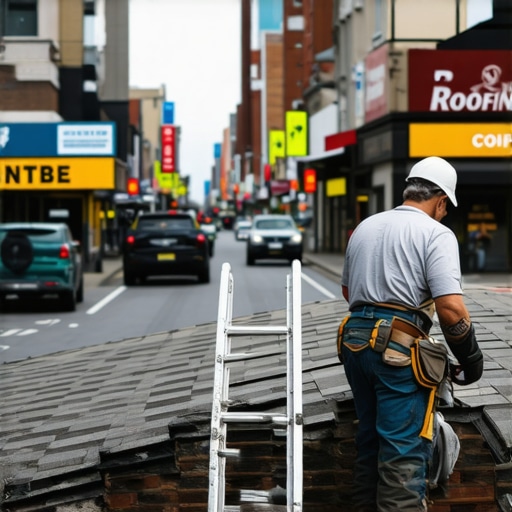
Visual authority is about authenticity. Google wants to see your trucks, your team at a job site, and your actual office building. Changing just one photo type – for example, replacing a generic logo with a high-resolution photo of your crew standing in front of a recently completed project – can double your profile impressions. When Google Vision sees “Roofing,” “Safety Vest,” and “Ladder” in a unique, geo-tagged photo, it reinforces your relevance to that specific location. This is why you must Stop Using Generic Stock Photos if You Want a Real Maps Rank Increase. Furthermore, many roofers fail to realize that Why Blurry Storefront Photos are Sabotaging Your Google Business Rank is a real technical issue; if the AI cannot parse the text on your signage or the details of your location, it cannot verify your prominence.
The 2026 Roofing Map Pack Checklist
To rank google business profile listings in today’s environment, you need a systematic approach to technical and behavioral signals. Here is a high-level checklist of the non-negotiables for 2026:
- NAP Consistency (The Foundation): Ensure your Name, Address, and Phone number are identical across the web, but focus specifically on high-authority platforms like Apple Maps, Bing, and industry-specific hubs.
- Primary Category Audit: Ensure “Roofing Contractor” is your primary category. Audit secondary categories to remove “noise” that dilutes your authority.
- Service Area Optimization: Stop claiming entire states. Define your service area by specific zip codes where you actually have a physical presence or recent jobs.
- Review Velocity and Sentiment: It’s not just about the number of reviews; it’s about the “velocity” (how often you get them) and the keywords used within them. Encourage customers to mention the specific service (e.g., “emergency roof repair”).
- Hyper-Local Signals: Implement 4 Neighborhood Signal Fixes to Upgrade Local SEO in 2026, including geo-tagged project photos and mentions of local landmarks in your business description.
- Mobile Responsiveness: Ensure your website (linked from your GBP) loads in under 2 seconds on mobile devices, as Map Pack rankings are heavily tied to mobile user experience.
By following these steps, you move from “guessing” to “engineering” your rank. You can use 5 Maps Performance Signals to Fix Your 2026 Rank [Checklist] to audit your progress monthly.
Conclusion: Moving Beyond “Cheap SEO”
The era of “cheap SEO” for roofers is over. If you are paying $500 a month for someone to post generic updates to your profile, you are throwing money away and potentially inviting a suspension. Hitting the Top 3 Map Pack in 2026 requires a deep understanding of google business profile optimization, interaction signals, and technical data integrity. You must move beyond basic citations and embrace a strategy that proves your relevance and prominence to Google’s AI every single day. Most roofers fail because they lack the patience and the technical expertise to manage the 4,500 annual algorithm shifts. If you want to transform your roofing business into a lead-generating machine, you need a google maps ranking expert who understands the nuances of the roofing vertical. Don’t let your business stay invisible; audit your profile today and claim your spot at the top.