Why Most Outsourced Local SEO Packages Fail to Move the Map Needle (and How to Fix It in 2026)
If you are a business owner or an agency partner, you’ve likely felt the sting of the “ROI Gap.” You’re paying $500, $1,000, or even $1,500 a month for a “comprehensive” local SEO package. Your provider sends you a monthly PDF filled with green arrows and lists of “citations created,” yet your phone isn’t ringing. You check the Map Pack for your most valuable keywords, and your business is nowhere to be found – buried on page 2 or 3 while your competitors bask in the glory of the top three spots. This is the reality of google business profile seo in 2026: most services are selling you “busy work” rather than “ranking work.”
The landscape of local search has shifted violently over the last 18 months. As we move through 2026, the instability of Map Pack rankings, particularly for service-area businesses (SABs), has reached an all-time high. The old playbooks – the ones built on mindless directory submissions and generic blog posts – are not just ineffective; they are a waste of your capital. To rank higher on google maps today, you need a strategy built on technical precision and local prominence, not an outsourced checklist from a white-label factory.
The “Busy Work” Trap: Why Your $500/Month Package is Failing
Most outsourced providers rely on automated checklists that Google’s AI-driven algorithm has already devalued or entirely ignored. These providers operate on a volume model. To keep their margins high while charging you $500, they have to spend less than $100 on the actual labor. This leads to the “Busy Work Trap,” where the activities performed are visible in a report but invisible to the algorithm.
Take citations, for example. For years, “NAP consistency” (Name, Address, Phone) was the holy grail of local SEO. Today, it is a baseline requirement – the “price of admission” – not a ranking booster. If your provider is still touting “50 new citations this month” as a major win, they are stuck in 2015. In fact, excessive, low-quality citations can actually muddy your data ecosystem. Often, The Citation Audit: Why Deleting Bad Data Beats Adding More Profiles is far more effective than adding more digital noise. Cleaning up fragmented data is “ranking work”; adding another profile on a forgotten directory is “busy work.”
Then there is the issue of generic backlinks. Many local seo services promise “High DA Guest Posts” as part of their package. The problem? A backlink from a general “lifestyle blog” based in another country does nothing to signal to Google that you are the best plumber in Phoenix. We have seen a massive shift where these High-Authority Backlinks Are Failing to Move the Map Needle because they lack hyper-local relevance. Google is looking for “street-level” signals, not just domain authority.
The economics of outsourcing also play a role. Recent ROI analysis shows that while white-label SEO is significantly cheaper – costing agencies roughly $234,000 annually in aggregate versus $322,000 to $485,000+ for a high-level in-house team – it often lacks the nuance required for competitive niches. When you outsource to a low-cost provider, you aren’t paying for a google business profile optimization expert; you’re paying for a data entry clerk following a script.
The Proximity Paradox: Why Being “Closest” Isn’t Enough Anymore
One of the most frustrating aspects of the current algorithm is what I call the Proximity Paradox. Logic suggests that if a user searches for “dentist” while standing outside your office, you should be the #1 result. However, in 2026, we frequently see competitors located five miles away outranking the business right next door. Why? Because Google has tilted the scales in favor of Prominence and Relevance over pure Proximity.
Your outsourced provider likely tells you that you can’t rank outside your immediate neighborhood because of the “proximity filter.” This is a half-truth used to excuse poor performance. While proximity is a primary factor, it can be overcome by strengthening your prominence signals. If Google perceives another business as a higher-authority “entity” for that specific search, it will expand the search radius to include them, effectively pushing you out of your own backyard.
Understanding The Proximity Paradox: Why Being the Closest Business Isn’t Enough is crucial. To combat this, you need a specialized google maps ranking service that understands how to build “Entity Authority.” This involves more than just keywords; it involves becoming the definitive answer for a local problem in Google’s Knowledge Graph.
4 Hidden Signal Gaps Your Outsourced Provider is Missing
To rank google business profile assets in highly competitive markets, you have to look at the signals that aren’t found in a standard SEO dashboard. These are the 2026 ranking factors that separate the dominant players from the also-rans.
- Interaction Signals: Clicks are the new currency. Google is watching how users interact with your profile. Do they click “Directions” and actually drive to your location? Do they click “Call” and stay on the phone for more than 30 seconds? Do they click through to your website and engage with the content? These 7 Surprising Interaction Signals That Actually Move the Map Needle are now more important than having the keyword in your business name.
- Entity Real-Time Data: For retail and service businesses alike, Google is prioritizing “live” information. If you are a hardware store, syncing your local inventory directly to your profile is a massive ranking signal. If you are a service provider, real-time availability via integrated booking is key. Check out how to Sync Local Inventory: 3 Fixes for Your 2026 Google Business Rank to stay ahead of the curve.
- AI Video Verification and Content: Google’s AI is now sophisticated enough to analyze video content uploaded to your profile. They use this to verify the physical existence of your storefront, the equipment in your trucks, and the legitimacy of your team. Profiles with high-quality, verified video content are seeing a significant boost in “Trust Scores,” which directly correlates to Map Pack positioning.
- Neighborhood Signals: Ranking for a city is no longer the goal; ranking for the neighborhood is. Google understands the difference between “Chicago” and “Wicker Park.” If your website and profile don’t mention hyper-local landmarks, neighborhood-specific news, or local events, you will lose to the business that does. We recommend implementing these 4 Neighborhood Signal Fixes to Upgrade Local SEO in 2026 to capture that granular traffic.
Why Your Local Keyword Reports Are Giving You False Success
If your local seo agency sends you a report showing you are #1 for your top keyword, ask them: “From where?” Most rank trackers provide a single data point – often from the center of the city or the agency’s own office. This is a “Rank Tracker Lie.”
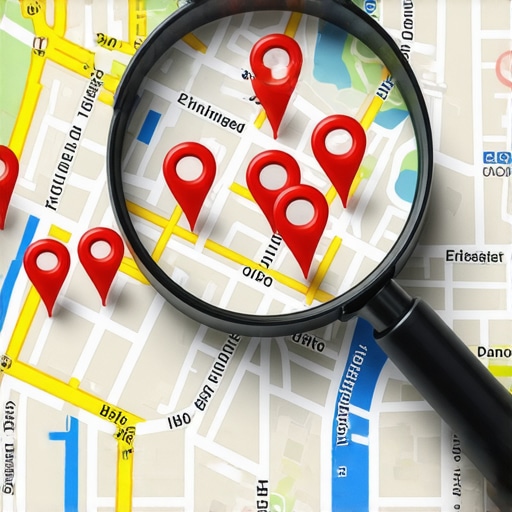
In reality, local rankings are a grid. You might be #1 when someone stands in your parking lot, but #14 when they are two blocks away. This “Swiss cheese” ranking pattern is common and often hidden by traditional reporting. To get a real view of your performance, you must use a google maps rank tracker that provides a “Geo-Grid” visualization. This shows you exactly where your “ranking bubble” ends.
Relying on static reports is one of the main reasons Why Your Local Keyword Reports Are Giving You False Success Signals. To truly dominate, you need to see the heat map of your visibility. I recommend using professional local seo software or GMB ranking tools from SEO Viper Tools to get an honest look at your map presence. If you don’t know where the “holes” in your grid are, you can’t fix them.
The 2026 Checklist for a Real GMB Rank Upgrade
If you suspect your current provider is just going through the motions, use this checklist to audit their work. A real gmb ranking service should be hitting these points monthly:
- Category Pruning: Are you using the most specific Primary Category? Are your secondary categories diluting your relevance? Categorization is the most powerful “on-page” lever for GBP.
- Review Velocity and Sentiment: It’s not just about getting 5 stars. It’s about “Review Velocity” (how consistently you get them) and “High-Intent” keywords within the reviews. If your customers aren’t mentioning your services and city in their reviews, you’re missing out.
- Hyper-Local Link Building: Stop buying PBN links. Start sponsoring the local Little League, getting featured in the neighborhood newsletter, or partnering with adjacent local businesses for co-branded content.
- Mobile UX and Local Intent: Does your landing page load in under 2 seconds on a 4G connection? Does it have a “Get Directions” button prominently displayed? Google uses mobile experience as a proxy for business quality.
For a deeper dive into these technical requirements, see our 5 Maps Performance Signals to Fix Your 2026 Rank [Checklist]. This is the blueprint we use to audit and rescue failing local campaigns.
Conclusion: Moving the Needle Requires Precision, Not Volume
The “spray and pray” method of local SEO is dead. “Cheap Local SEO” is actually the most expensive thing a business can buy because of the opportunity cost. Every month you spend $500 on a failing package is a month your competitor is siphoning off your leads and building an insurmountable lead in “Entity Authority.”
Moving the needle in the 2026 Map Pack requires a surgeon’s precision, not a sledgehammer. It requires an understanding of interaction signals, neighborhood relevance, and the technical nuances of google business profile optimization. Stop settling for monthly reports that show “activity” and start demanding “map dominance.”
If you’re ready to stop the “Busy Work” and start the “Ranking Work,” it’s time for a change. Contact Us today for a real audit of your Map Pack performance and let’s build a strategy that actually rings the phone.