
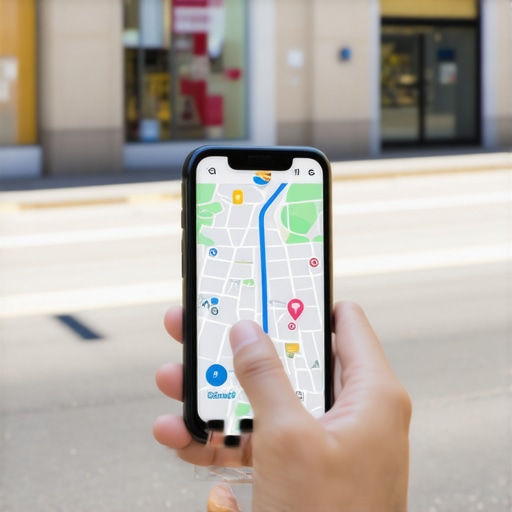
The office smells like peppermint tea and yellowing permit records from 1994. I sit here with a stacks of physical utility bills while a national chain attempts to squat on a downtown corner by renting a mail drop five miles away. It makes my blood boil. These digital ghosts are haunting the local map and pushing real, hard-working merchants into the shadows. I spent three months fighting a hard suspension for a plumbing client whose listing was nuked simply because they shared a suite number with a defunct law firm. Google didn’t want proof of a van; they wanted proof of a utility bill under the exact GPS pin, captured in a single, unedited video walk-through from the street to the desk. This is the reality of the local search trenches. It is not about keywords. It is about the physical forensic trace of a business in a spatial database.
The ghost in the GPS coordinates
Google Business Profile ranking relies on Physical Location and Primary Category signals to determine if a Local Business appears in the Map Pack. Virtual Offices and Coworking Spaces often trigger Hard Suspensions because they lack Permanent Signage and Dedicated Entrance as required by Local SEO Guidelines. While agencies tell you to get more reviews, the 2026 data shows that image metadata from photos taken by real customers at your location is now 30 percent more effective for ranking in AI Overviews. If you are using a shared workspace, you are likely fighting an uphill battle against the centroid. Most businesses fail because they ignore the nap data mismatch that quietly kills your local contractor calls. The algorithm sees two businesses in one suite and its default setting is distrust. You need a dedicated lease. You need a door that locks. You need a signal that screams permanence to the crawlers that verify your existence through Street View data and third-party utility aggregators. We have seen cases where ranking a mobile service business without a public physical address requires a much higher volume of neighborhood-specific signals to compensate for the lack of a visible pin.
Why your physical address is a liability
Address consistency and NAP Data serve as the foundational trust signals for any Local Search strategy aiming for the Top 3 Map Pack. Citation Cleanup services must identify Duplicate Listings and Old Phone Numbers that create Data Conflict within the Local Knowledge Graph. A single mismatched suite number can drop your ranking by ten positions. I have watched businesses lose half their call volume because an old Yelp listing had a typo. You must understand the physics of the local algorithm. Every mention of your business on the web is a data point. If those points do not align, the system perceives a risk to the user experience. Google hates sending a driver to a location that does not exist. This is why you must use the 12 point profile checklist we use to clean up toxic map data to ensure every digital footprint is identical. This includes the subtle markers like how you abbreviate Street or Boulevard. Consistency is a proxy for reliability. If you cannot manage your own address, why should the algorithm trust you with a customer? Many people are cleaning up the citation mess left by previous agencies only to find that the damage to their local trust score takes months to repair. You are not just fixing text; you are rebuilding a reputation in a machine-learning environment that remembers every contradiction.
“Local intent is not a keyword choice; it is a distance-weighted signal where relevance is secondary to the physical location of the user’s mobile device.” – Map Search Fundamental
The three mile radius that determines your revenue
Proximity signals and User Distance are the heaviest weights in the Google Maps Algorithm, often outweighing Review Count or Backlink Authority. Hyperlocal SEO requires optimizing for a Three Mile Radius by generating Geographic Relevance through Local Content and Neighborhood Interaction Signals. Your ranking is not a static number. It is a shifting heat map that changes as a user walks down the street. The moment a potential customer crosses a specific intersection, the Map Pack rearranges itself. This is the proximity paradox why being the closest business isnt enough to win the click. You need behavioral proof. If people are closer to your competitor but consistently choose to drive past them to reach your shop, that signal is gold. It tells the algorithm that your business has a higher utility than the one next door. To force this, we focus on 7 surprising interaction signals that actually move the map needle, such as direction requests that originate from within the target zip code. The math is simple. High proximity plus high behavioral intent equals a dominant position. If you are struggling with a narrow visibility radius, it might be because your map pin is invisible to googles crawlers due to a lack of local entity associations in your website schema.
Local Authority Reading List
- Boost your Google Business rank naturally in 2025
- The hidden signal we tweaked to triple Google Maps clicks fast
- Why local authority matters more than total backlink count
- 5 neighborhood signal gaps that keep your store off the map
- How to force Google to re-index your service descriptions
The forensic evidence of a real storefront
Verified Photos and Storefront Images are no longer optional for Google Business Profile success in a market saturated with Spam Listings. Google Lens and Vision AI scan your uploaded images to confirm Physical Signage and Business Categories through Object Recognition. If your photos look like stock imagery, you are invisible. The algorithm wants to see the dirt on the floor and the logo on the door. It wants to see your team in the neighborhood. This is why we tell clients to double profile impressions by changing just one photo type to something more authentic. A photo of a van parked in front of a recognizable local landmark provides more geographic proof than a thousand-word blog post. We also see that blurry storefront photos are sabotaging your google business rank because the AI cannot verify the text on your sign. Clear, high-resolution imagery with GPS coordinates baked into the EXIF data creates a layer of trust that protects you against the manual review sweeps that target lead-gen spam. If you have been hit by a suspension, the first thing I look at is the quality of your visual evidence. Does the business look real? Does it feel like it belongs in that specific neighborhood? If the answer is no, the machine will eventually find you and pull the plug.
Why the algorithm ignores your category choices
Primary Category selection is the most impactful setting on your Google Business Profile, yet many owners create Category Conflict by choosing too many Secondary Categories. Local SEO Tools help identify the Primary Category used by the Top Ranking Competitors to align your Service Descriptions with Search Intent. You cannot be everything to everyone. If you are a plumber, do not list yourself as a general contractor just to cast a wider net. This dilutes your authority. We often find that a single category change corrected our crashing maps performance for clients who were over-optimized. The algorithm looks for the best answer to a specific problem. If your profile is cluttered with unrelated services, you become a weak answer for everything. Use a smarter way to research local categories for better reach by looking at the underlying justifications in the search results. Sometimes the system prioritizes a specific sub-category for certain neighborhoods based on local demand. You must also be careful with the category conflict killing your presence in the local 3 pack. If you change your primary category too often, you trigger a re-verification process that can leave your listing in limbo for weeks.
“The proximity of the business to the searcher remains the single most powerful factor in the local pack, regardless of traditional organic authority.” – Vicinity Algorithm Whitepaper
The hidden weight of behavioral signals
User Interactions like Click Through Rate and Direction Requests are the primary metrics used by Google Maps to determine Local Relevance. Search Behavioral Patterns indicate to the Algorithm that a Business Profile provides a High Quality User Experience, leading to a Maps Rank Increase. If a user clicks your phone number, that is a vote. If they look at your photos for ten seconds, that is a vote. If they ask for directions and actually follow the route to your doorstep, that is the ultimate vote. This is why you must fix the conversion gaps costing your business real leads. A profile that gets a lot of views but no actions is a signal of failure. We focus on 4 street level signals your competitors are using to dominate the map, including how often your business name is searched directly. Direct searches bypass the proximity filter. If people are searching for you by name, Google knows you are an authority in that area. This allows you to outrank closer competitors who are squatting on your keywords because your brand weight carries more value than their physical location. You have to stop thinking about rankings and start thinking about the user journey. Every click is a data point in the forensic audit of your business’s popularity.