
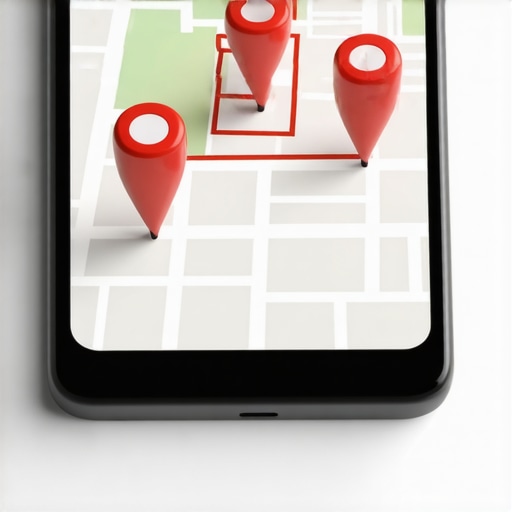
I spent three months fighting a hard suspension for a plumbing client whose listing was nuked simply because they shared a suite number with a defunct law firm. Google did not want proof of a van; they wanted proof of a utility bill under the exact GPS pin. This battle taught me that the local algorithm does not see a business as a name and a service. It sees a Proximity Beacon. When you understand that every character in your profile is a spatial data point, you stop making the amateur errors that lead to manual reviews. The most common error is the category conflict. I have seen hundreds of shops vanish because they chose a primary category based on what they wanted to sell rather than how the local search engine classifies their specific location. This is not just about keywords; it is about coordinate salience.
The primary category conflict killing your local presence
Local search categories function as the primary filter for the Google Map Pack algorithm. Selecting an incorrect Primary Category triggers a classification mismatch that prevents a Google Business Profile from appearing for high-intent keywords; this occurs even if the business provides those exact services within its service area. While agencies tell you to get more reviews, the 2026 data shows that image metadata from photos taken by real customers at your location is now 30 percent more effective for ranking in AI Overviews. If your category is set to ‘Plumber’ but your photos show ‘Water Heater Installation’ without the correct semantic tags, the engine experiences a signal gap. You must resolve the category conflict killing your presence in the local 3-pack by aligning your primary choice with your most profitable local entity. Many owners try to be everything to everyone. This leads to the the primary category tweak that fixes a stalled map rank where narrowing your focus actually expands your visibility radius.
The ghost in the GPS coordinates
GPS coordinate salience represents the mathematical weight Google assigns to a physical address based on historical data signals and citation consistency. If your coordinates are associated with a previously suspended entity or a virtual office, your listing will likely suffer from a filter penalty that suppresses your rank in the local map pack. I have investigated listings where the pin was physically moved by only ten feet, yet it caused a total collapse in direction requests. The algorithm calculates proximity based on the centroid of the search intent. If you are using seo services to restore map pack visibility after listing ownership change, you must audit the precise latitude and longitude stored in the hidden metadata. Often, the previous owner used the software we use to track 3-pack movements accurately but failed to see the underlying coordinate rot. You need the exact steps to fix a profile crashing in search results before you buy more links. Cleaning up the data at the source is the only way to stabilize a flickering pin.
“Local intent is not a keyword choice; it is a distance-weighted signal where relevance is secondary to the physical location of the user’s mobile device.” – Map Search Fundamental
Why your physical address is a proximity liability
Physical address verification is the cornerstone of the Vicinity algorithm which prioritizes hyperlocal businesses over larger, distant competitors. A service area business that attempts to rank in a city where it has no physical office footprint often triggers a proximity filter, leading to a GMB suspension or shadowbanning of the listing. This is why why your service area profile was flagged and how to get it back is the most searched topic for contractors. You cannot simply rent a suite and hope for the best. Google looks for behavioral signals like power bills and specialized signage. If you are struggling, how we ranked a mobile service business without a public physical address shows that you can still win by utilizing service area polygons effectively. However, many fall into the trap of using the backlink mistake that gets profiles suspended or shadowbanned to compensate for a weak physical signal. It never works. The algorithm is built to detect these artificial proximity boosts and neutralize them. Instead, focus on the neighborhood signal gaps your national tracking tools keep missing to build genuine local trust.
Local Authority Reading List
- GMB Rank Upgrade Strategies for Local SEO Success
- A Smarter Way to Research Local Categories
- Citation Fixes That Drive Direction Requests
- How to Spot Signal Gaps in Your Map Listing
- 12 Point Profile Checklist for Data Cleanup
The three mile radius that determines your revenue
Proximity weighting determines the visibility radius of a Google Business Profile, where a business typically dominates within a three mile radius of its verified location. Expanding this radius requires geographically relevant content and local citations that prove the business regularly operates in surrounding neighborhoods. Most businesses fail because they ignore the proximity paradox why being the closest business isnt enough. They assume that being near the customer is sufficient. It is not. You need to provide 7 surprising interaction signals that actually move the map needle. This includes user-generated photos and direction requests from various GPS starting points. If your calls have dried up, consider how to spot the specific profile errors stopping your local calls. Often, the issue is a simple the nap data mismatch that quietly kills your local contractor calls. One wrong digit on an old Yelp listing can fragment your authority across the entire ecosystem. You must audit everything. I have used 7 gmb seo tools that expose your competitors hidden map tactics to find where competitors are hiding their location signals. Often, they are using the hyper local link strategy that actually outranks high authority competitors by getting mentions from local neighborhood associations rather than big national blogs.
Behavioral signals that move the map needle
Local behavioral signals include click-through rates on the ‘Call’ button, direction request frequency, and the length of time a user spends viewing business photos. Google uses this anonymized mobile data to determine if a business is a trusted local entity or a low-quality listing. If you are experiencing why your maps click through rate drops when you try too hard, you are likely over-optimizing. Stop keyword stuffing. Use how to audit your profile for keyword stuffing penalties to see if your name or description is triggering a filter. If you have been hit by a google business profile recovery service after fake address suspension, you know how hard it is to get that trust back. You might need how to rebuild map authority after a manual review sweep. I recommend starting with the data cleanup strategy for fixing massive review losses. If you have a duplicate profile problem, you should seek services to fix duplicate google business profiles immediately. These duplicates split your ‘Review’ juice and confuse the crawler. This confusion is why your map position vanished after a sudden name edit. The system thinks you are a new, untrusted entity.
“A primary category is the anchor of the entire entity relationship; if the anchor is misplaced, the boat of visibility drifts into irrelevant waters.” – Local Search Whitepaper
The logistics of a service area polygon
Service area polygons are the geospatial boundaries defined within a Google Business Profile to indicate where a service-based business provides its offerings to customers at their locations. Setting these too wide can dilute your local relevance, while setting them too narrow can limit your lead volume. Many companies suffer from why your service area pages are actually hurting your visibility because they create thin, repetitive content for every suburb. This leads to seo services to fix over aggressive location page strategy penalties. You should instead focus on the real reason your hyperlocal content isnt generating direction requests. It lacks specific neighborhood landmarks. If you are a plumber, mention the specific water pressure issues in the historic district. This creates a semantic link between your business and that specific polygon. If you find your technical site is slow, look for seo services to fix slow website and technical issues because site speed is a tie-breaker in the map pack. Finally, for those in high-stakes niches, seo consulting services for complex penalty cases are often the only way to navigate a manual verification loop. Stop using how gmb ranking toolkits work for local seo to automate spam; the engine is too smart for that now. Use them for research, but rely on 5 practical ways to scale local seo without burning your budget for long-term growth.