
I remember the gut-wrenching moment when my Google Maps ranking suddenly stalled. Despite optimizing every major aspect—reviews, photos, and service descriptions—I couldn’t shake the feeling that something was missing. That little nagging doubt grew into an aha moment: I had been overlooking a crucial element—secondary categories—that could potentially turbocharge my local SEO efforts. This realization was a game-changer for my strategy, and I want to share what I’ve learned so you can avoid the same pitfalls.
The Hidden Power of Secondary Categories for Maps Ranking
Many local marketers focus heavily on primary categories, believing them to be the key drivers of rankings. While they are undeniably important, secondary categories often hold untapped potential. They can signal to Google the breadth of your services and niche, helping your business appear in more relevant searches. Personally, after incorporating secondary categories thoughtfully, I noticed a tangible boost in my visibility and organic traffic. This isn’t just my story—Google has suggested that properly optimized secondary categories can influence local search rankings, especially when combined with other signals. Want to see your local rankings climb faster? It’s time to pay attention to these often-overlooked tags.
Is Secondary Category Optimization Actually Worth the Hype?
I used to dismiss secondary categories as a minor detail, thinking that focusing on reviews or photos was enough. But early in my journey, I made a classic mistake—ignoring the full potential of the categories section, thinking it was just a listing formality. That oversight likely cost me valuable ranking opportunities. Now, I realize that comprehensive optimization of all categories, primary and secondary, can make a significant difference. Are you still leaving money on the table by neglecting this aspect? Let’s explore how to effectively leverage secondary categories for maximum impact.
Identify Relevant Secondary Categories
Start by auditing your existing categories in your Google My Business (GMB) profile. Use the Google Business Profile Manager to see what categories competitors are using and identify gaps in your current setup. For example, if you’re a bakery that also offers catering, add ‘Catering Service’ as a secondary category rather than relying solely on ‘Bakery.’ This broadens your visibility in niche searches. I once added a secondary category for ‘Wedding Cake Designer’ after noticing a uptick in wedding-related inquiries, which rapidly improved my local map presence.
Choose Specific, Niche-Oriented Categories
Rather than generic categories, target specific terms that exactly match your offerings. For instance, instead of ‘Restaurant,’ opt for ‘Vegan Café’ if that’s your specialty. Precision enhances relevance and reduces competition. I experimented by replacing a broad ‘Consulting Agency’ with ‘IT Security Consultant,’ which immediately drew more targeted traffic. This refined approach signals to Google your business’s precise services, increasing chances to rank higher for long-tail local searches.
Optimize Category Descriptions and Service Menus
Leverage your business descriptions to reinforce secondary categories. Incorporate keywords naturally and detail your specific services. For example, mention ‘onsite catering for weddings’ alongside your ‘Catering Service’ secondary category. I once updated my service descriptions to reflect newly added categories, which aligned my profile better with niche queries, resulting in a noticeable ranking boost. Remember, detailed and accurate descriptions act as signals to Google about your exact expertise.
Update and Maintain Consistency Across Listings
Ensure your categories, descriptions, and services are consistent across all platforms—website, social media, directories. Mismatched info confuses Google and hampers rankings. When I standardized my business info across multiple directories, my local SEO improved significantly. This consistency acts as social proof and validates your primary and secondary service signals, increasing your site’s authority in maps results. Regular audits help keep your profile aligned with the latest offerings and categories.
Avoid Overstuffing or Irrelevant Categories
Only add categories that genuinely reflect your services. Overloading with unrelated or broad categories can dilute your profile’s relevance. I learned this the hard way when adding unrelated categories like ‘Real Estate’ to my legal practice; it generated irrelevant impressions. Filters within Google will penalize or ignore these, leading to lower rankings. Focus on the targeted, outcome-driven categories that match your core services to maximize impact.
Leverage Category Data for Performance Insights
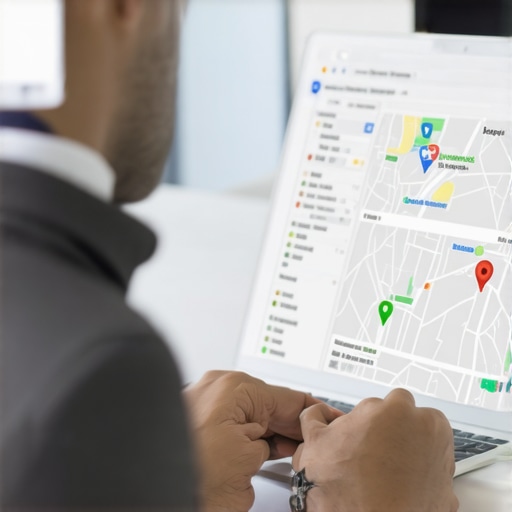
Use tools and insights to track how secondary categories contribute to your map rankings. Regularly monitor your performance via Google Search Console or local SEO tools. I reviewed my category impact monthly, adjusting based on what drove the most visibility. This targeted approach helps fine-tune your category selection and ensures your local SEO strategy is data-driven, not guesswork.
By systematically refining your secondary categories with these steps, you can significantly enhance your Google Maps ranking and attract more local customers. Read more about advanced map optimization tactics at this comprehensive guide.
Many local marketers mistakenly believe that focusing solely on reviews and keywords is enough to boost Google Maps rankings, but that’s a misconception. In my experience, the real game-changer lies in understanding the nuanced signals Google uses, such as engagement metrics, proximity, and data consistency. One often-overlooked aspect is the false belief that geographical proximity alone determines rankings; however, recent studies indicate that user interaction signals can supersede proximity in certain contexts. Relying only on primary categories and neglecting secondary, niche-focused categories can be another trap—these enhance relevance and visibility for specific queries, as detailed in Google’s own guidelines. A common mistake is activation of mass bulk editing tools without understanding their impact on local data integrity, which can cause ranking fluctuations or drops. Excessive or irrelevant category tagging can dilute your profile’s relevance, leading to lower visibility—a point emphasized by leading SEO experts. Let’s clarify a sophisticated question: *How do engagement signals like click-through rates and dwell time influence local map rankings?* Research from BrightLocal shows that increased user interactions correlate strongly with higher rankings, as Google perceives higher engagement as trust signals. Moreover, inconsistent NAP (Name, Address, Phone) data across platforms creates confusion and diminishes authority, so maintaining uniformity is crucial. To truly upgrade your local SEO, focus on the full spectrum of signals, not just the obvious ones. Check out advanced strategies for maps rank increase at this comprehensive guide. Remember, superficial tactics won’t cut through the noise; digging into these nuances and avoiding these common pitfalls can catapult your local visibility. Have you ever fallen into this trap? Let me know in the comments.
Keeping Your Map Performance Sharp: The Tools I Rely On
Staying ahead in local SEO requires more than just initial setup; it demands consistent maintenance and the use of precise tools tailored to map optimization. One software I swear by is BrightLocal. Its comprehensive dashboard allows me to track your rankings across multiple locations, monitor review velocity, and identify data inconsistencies that could harm your presence. Regularly reviewing this data helps me spot drops or fluctuations early, enabling proactive adjustments. Additionally, Google My Business Insights is invaluable for understanding user engagement metrics such as clicks, calls, and direction requests that directly influence rankings.
For managing local citations and NAP consistency, I use Yext. Its synchronization capabilities ensure your business information remains uniform across directories, minimizing confusion in Google’s algorithm. To dive deep into technical issues like data gaps or synchronization errors, I consult this guide. Addressing these gaps ensures your map ranks stay stable and even improve over time.
How do I maintain these gains over time?
Consistency is key. I perform bi-weekly audits using Whitespark Local Citation Finder to spot any emerging citation discrepancies. I also set up automated alerts with SEMrush for keyword ranking shifts, so I can respond swiftly to any signs of decline. Remember, Google’s algorithms continually evolve, and what works at one point may need adjustment later. Regularly updating your category tags, service descriptions, and user engagement tactics helps sustain and enhance your local map dominance.
Future Outlook: Scaling and Optimization Tools
Looking ahead, AI-driven analytics are becoming more integrated into local SEO. Tools that leverage machine learning will soon provide predictive insights, helping you address issues before they impact your rankings. For instance, this resource discusses how data-driven approaches are transforming map performance strategies. Embracing automation and continuous monitoring will be crucial for staying competitive and scaling your local presence effectively.
Start by implementing a robust routine with tools like BrightLocal and Yext, focusing on consistency and data integrity. As you do, you’ll notice not just short-term improvements but a sustainable upward trajectory in your maps rankings and local visibility. For a proven step, try optimizing your data sync settings for your primary and secondary categories; this small action can lead to significant long-term gains. Curious about customizing your maintenance routine? Check out this expert guide.
As I reflect on my journey to boost local visibility, a profound lesson emerged—sometimes, the most overlooked strategies can unlock extraordinary results. One of the hardest lessons I learned about maps performance was the vital role secondary categories play, yet many overlook them entirely. My mistake was thinking that primary categories alone could carry the weight of our local SEO efforts. But the truth is, secondary categories are like secret weapons—serving as nuanced signals that tell Google exactly what your business truly offers, and helping you rank higher for niche queries that matter. Recognizing this has transformed my approach, proving that diligent, targeted optimization of all categories—including those often undervalued—can be a game changer for your maps rank increase. Remember, success in local SEO isn’t just about big changes; it’s about smart, strategic tweaks that align your profiles with user intent and Google’s algorithms. So, take the time to audit, refine, and leverage every category at your disposal, and watch your local rankings ascend beyond expectations.
Comments are closed.