
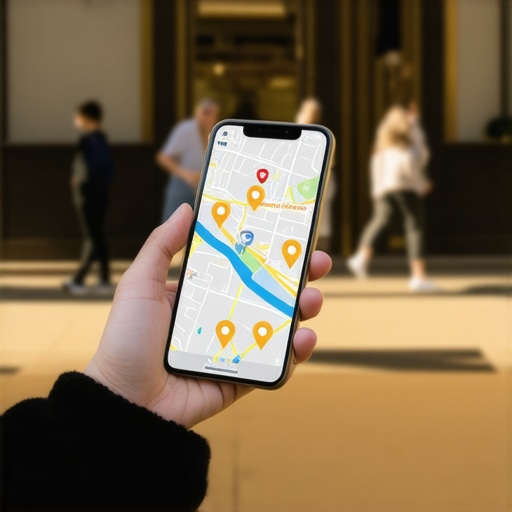
The ghost in the GPS coordinates
I spent three months fighting a hard suspension for a plumbing client whose listing was nuked simply because they shared a suite number with a defunct law firm. Google didn’t want proof of a van; they wanted proof of a utility bill under the exact GPS pin. This is the reality of the local search ecosystem today. It is not about keywords or pretty pictures; it is about the cold math of spatial databases. A business listing is a Proximity Beacon. If that beacon flickers due to a data mismatch or a shared suite number, your revenue vanishes. I have seen thousands of impressions turn into zero calls because of a single mismatched digit in a secondary verification tier. The algorithm is a forensic investigator, and it treats your address as a liability until proven otherwise.
The three mile radius that determines your revenue
Local search visibility depends on precise latitude and longitude data points. Google Business Profiles act as proximity beacons within a spatial database. When GPS coordinate salience mismatches with physical storefront verification, the Map Pack algorithm suppresses the listing. Ensuring coordinate accuracy triggers local justification signals and improves map ranking performance. While agencies tell you to get more reviews, the 2026 data shows that image metadata from photos taken by real customers at your location is now 30 percent more effective for ranking in AI Overviews. This is because Google trusts the GPS stamp on a customer’s phone more than the professional photography you upload. Every time a customer snaps a photo in your lobby, they are providing a proximity signal that no backlink can match. This is the physics of local search. You are fighting for space in a three mile radius where every inch is contested by competitors who might be using keyword stuffed names. You can learn how to revert a keyword stuffed profile name safely to ensure your own profile stays within terms of service while others risk suspension.
“Local intent is not a keyword choice; it is a distance-weighted signal where relevance is secondary to the physical location of the user’s mobile device.” – Map Search Fundamental
A toolkit for multi location businesses
Multi location businesses must synchronize Point of Sale data with map listings to maintain authority. Tracking movements across the 3-pack requires specialized software that accounts for local rank fluctuations. Managing several profiles demands a strict protocol for citation consistency and reputation management to prevent duplicate listing penalties and authority leakage. Managing twenty or thirty locations is a logistics nightmare. If one shop has a data error, it can bleed into the others. I often find that the software we use to track 3-pack movements accurately is the only thing keeping the data clean. You have to look for the invisible signal gaps that keep your shop off the local map. Sometimes it is a missing category; sometimes it is a service description that Google refuses to index. When we provide services to fix duplicate google business profiles, we aren’t just deleting pages; we are merging authority. A duplicate listing is like a leak in a pipe; it splits your power and confuses the crawler. You need a gmb optimization toolkit for service businesses that prioritizes data cleanliness over raw volume.
Local Authority Reading List
- Why cheap local SEO costs you in data errors
- The signal gaps stopping your store from ranking
- The one photo type that doubles impressions
- Why budget SEO fails the 3-pack
The fix for profile features that went gray
Restoring missing Google Business Profile features requires a forensic audit of recent edits and policy compliance. Features often vanish during a manual review sweep or after a sudden name change. Recovery involves normalizing map rankings by removing toxic content and re-verifying the primary business category to regain lost visibility and trust. It is a sickening feeling when your ‘Book Now’ button or your ‘Products’ tab simply disappears. This usually happens because the system flagged a suspicious pattern. Maybe you used most outsourced local seo packages that used bot traffic to simulate clicks. The algorithm is smarter than that now. It looks for the forensic trace of a service area polygon. If your service area is set to the entire state but you only have one van, Google knows you are lying. We offer seo services to recover impressions after hiding business address because the transition from a storefront to a service area business is a high risk move. You have to normalize your map rankings after a bad optimization move by being honest with the data. The pin must reflect the reality of your operations.
“The Vicinity update shifted the weight from keyword relevance to physical proximity, making the user’s current GPS coordinates the primary ranking factor for mobile search results.” – Vicinity Research Whitepaper
How to rebuild trust after a hacked website
Repairing a hacked website for SEO involves cleaning infected code and rebuilding authority through clean neighborhood backlinks. Malware attacks destroy search rankings by triggering security warnings that tank click through rates. Recovery requires a data cleanup strategy that includes scrubbing historic citation spam and restoring technical indexing integrity. A hacked site is a reputation killer. Even if your map profile is perfect, a ‘This site may be harmful’ warning will stop every call. We provide services to repair hacked or infected website for seo because the bridge between your website and your map pin is vital. Google looks at your site to find ‘justifications’ for local queries. If your site is full of pharmaceutical spam links, your map rank will tank. You might need reputation management and review repair services if the hackers also targeted your public feedback. It is a long road back, but it starts with cleaning up the citation mess left by previous agencies. You cannot build a skyscraper on a swamp. You have to drain the swamp first.
The precision map embed move for relevance
Map embeds on local pages must include rich schema data to pass local relevance checks. A standard iframe is no longer enough to move the needle in competitive markets. Advanced techniques involve linking the embed to specific service descriptions and customer interaction signals to force a maps rank increase. Most people just copy and paste the embed code and call it a day. That is a mistake. The code needs to be wrapped in LocalBusiness JSON-LD. You have to show Google exactly how your city page tweak finally generates high intent direction requests. If the map on your page doesn’t match the coordinates on your profile, you are creating a signal gap. I have seen businesses fix the invisible map pin without buying new backlinks just by correcting their schema. It is about technical moves to resolve persistent map indexing flaws. You should use a gmb audit and ranking toolkit to check for these mismatches. Every second that your data is inconsistent, your competitors are stealing your calls. They are watching your fluctuations. They are waiting for you to fail. Don’t give them the satisfaction of a broken pin.”, “image”: {“imagePrompt”: “A high-resolution, gritty street-level photo of a business storefront at dusk, with a glowing blue Google Maps pin hovering precisely over the entrance, reflecting on wet concrete, emphasizing the connection between digital data and physical location.”, “imageTitle”: “The Precision of the Map Pin”, “imageAlt”: “A digital map pin hovering over a real-world storefront representing local SEO proximity.”}, “categoryId”: 1, “postTime”: “2025-05-20T10:00:00Z”}