How to Spot the Signal Gaps Costing Your Business Local Map Leads
You have a 4.9-star rating. Your photos are high-resolution, and you post updates twice a week. Yet, the phone has stopped ringing, and your competitors – some with fewer reviews and worse websites – are dominating the local 3-pack. As a Google Business Profile Product Expert, I see this daily. The frustration is real, but the cause is often invisible to the naked eye. We call these “Signal Gaps.”
In the evolving landscape of google business profile seo, the traditional “set it and forget it” mentality is a recipe for obsolescence. By 2026, generic optimization is effectively dead. Google’s algorithm has moved beyond simple keyword matching and is now deep into the territory of semantic relevance and real-world behavioral signals. If you want to rank google business profile listings in highly competitive markets, you must identify where your digital data is failing to confirm your physical business reality to Google’s AI. This article will dissect the core pillars of local search – Relevance, Proximity, and Prominence – to show you exactly where your leads are leaking.
The Proximity Paradox: Why Being “Near” Isn’t Enough
The most common misconception in local search is that proximity is the ultimate trump card. Many business owners believe that if they are the closest provider to a searching user, they will naturally appear first. This is what I call the Proximity Paradox. While Google’s “Possum” and “Vicinity” updates tightened the leash on distance, “Prominence” can, and often does, override physical proximity.
In my experience as a local SEO consultant, I’ve seen businesses located blocks away from a user lose out to a competitor three miles away. Why? Because the competitor has a stronger “Local Authority” signal. Google’s goal is to provide the best answer, not just the closest one. If your business lacks the necessary digital signals to prove you are a high-quality entity, Google will “filter” you out in favor of a more prominent option further away.
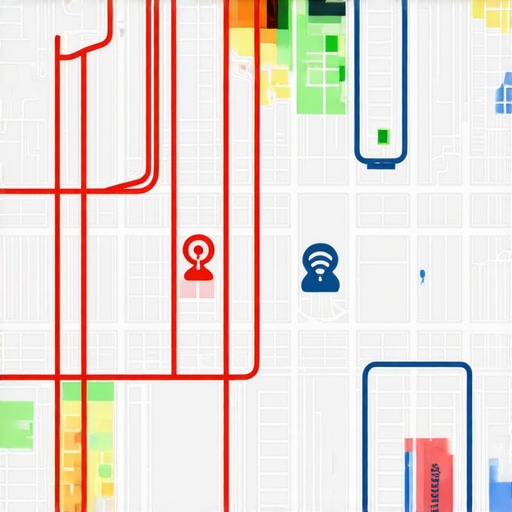
To understand how this affects you, you must look at your rankings through a geo-grid lens. The Proximity Paradox: Why Being the Closest Business Isn’t Enough explains that proximity is a hard filter, but prominence is the ranking engine. If you find your visibility dropping off sharply just a few blocks from your office, you have a prominence gap. You can use advanced local seo tools to track these micro-movements. A google maps rank tracker will show you exactly where your “signal” terminates, allowing you to focus your local link-building and citation efforts on the specific neighborhoods where you are currently invisible.
The “Dead Zone” Analysis
If you are using a standard rank tracker, you are likely seeing a single data point for a city. This is a mistake. Why Your Local Keyword Reports Are Giving You False Success Signals highlights how a “Rank #1” report can mask the fact that you are invisible to 90% of your target service area. You need to identify the “Dead Zones” where your proximity signal fails to convert into a ranking signal.
Identifying Relevance Gaps in Your Service Menu
Relevance is the second pillar, and it is where most businesses fail during their google business profile optimization. Google’s AI, specifically through its BERT and MUM models, is now incredibly adept at understanding intent. It doesn’t just look at your primary category; it looks at your entire service menu, your website’s service area pages, and even the “hidden” attributes in your profile.
A major signal gap occurs when there is a mismatch between what you say you do and what Google believes you do. Many contractors and lawyers use generic categories like “Plumber” or “Personal Injury Attorney” but fail to build out the granular service items that Google uses to match specific long-tail queries. If a user searches for “tankless water heater repair” and your service menu only says “Plumbing,” you are creating a relevance gap. Why Incomplete Service Menus Stop Your Maps Rank Increase is a critical read for anyone wondering why they rank for broad terms but miss out on high-intent, high-margin leads.
The Danger of Duplicate and Generic Services
Google’s AI is increasingly sensitive to “noise.” If your service menu is stuffed with duplicate items or generic descriptions that don’t offer unique value, it can actually dilute your relevance. In 2025 and 2026, hyperlocal relevance is the gold standard. This means your service descriptions should not only describe the “what” but also the “where.” Mentioning local building codes, specific neighborhoods you serve, or local landmarks within your service descriptions provides the “neighborhood signals” Google craves.
- Audit Tip: Check your “Services” tab on mobile. If it looks like a wall of text with no structure, Google is likely struggling to parse your data.
- Intent Matching: Ensure every high-value service on your website has a corresponding, detailed entry in your Google Business Profile.
- Service Area Pages: Be careful here. Why Your Service Area Pages Are Actually Hurting Your Visibility discusses how poorly optimized, thin-content location pages can actually trigger spam filters rather than help you rank.
The Prominence Gap: Interaction Signals vs. Review Counts
We often hear that “reviews are everything.” While reviews are a massive part of the prominence pillar, they are not the only part. In fact, having 500 reviews with zero “interaction signals” is a major red flag for Google’s algorithm. Interaction signals include direction requests, click-to-calls, and even “High-Intent Store Visits” (tracked via mobile GPS data).
If you have a high review count but low engagement, you have a prominence gap. Google interprets this as a lack of real-world popularity. This is why some businesses with 50 reviews outrank those with 500. The business with 50 reviews might have a higher “velocity” of direction requests and calls, signaling to Google that they are the current “hot spot” in that area.
Furthermore, the way you respond to reviews matters. Many agencies suggest stuffing review responses with keywords to help rank google business profile listings. This is a dated and dangerous tactic. Why Your Detailed Review Responses Aren’t Helping Your Map Position explores how keyword-stuffed responses can look like spam to Google’s NLP (Natural Language Processing) engines. Instead, focus on authentic engagement that encourages further interaction.
The CTR Factor
Click-through rate (CTR) from the search results to your profile is a massive prominence signal. If your listing appears in the 3-pack but no one clicks it, Google will eventually demote you. This is why your “Cover Photo” and “Business Description” are not just aesthetic choices – they are conversion tools. A signal gap here means you are winning the “impression” but losing the “intent.”
Technical Signal Gaps: NAP and Data Sync Errors
The most frustrating signal gaps are the technical ones. These are the “invisible” errors that prevent your business from being indexed or displayed correctly. The most common is the NAP (Name, Address, Phone) mismatch. If your business name is “ABC Plumbing” on Google but “ABC Plumbing & Heating” on Yelp, you are creating a data conflict.
In my work as a GBP Product Expert, I’ve encountered many instances of the “Invisible Map Pin.” This is where a business is verified and has a profile, but it simply doesn’t show up on the map for relevant queries. Often, this is caused by real-time sync errors between Google’s primary index and its various “knowledge graph” sources. How We Fixed the ‘Invisible’ Map Pin Without Buying New Backlinks details how resolving these data conflicts can restore visibility almost instantly.
To identify these technical gaps, you need a robust google maps ranking service that can audit your citations across the web. If Google sees inconsistent data, it loses “confidence” in your listing. When confidence drops, your ranking drops. This is particularly vital for contractors who may have moved offices or changed phone numbers over the years. The NAP Data Mismatch That Quietly Kills Your Local Contractor Calls is a perfect example of how a small clerical error can cost thousands in lost revenue.
The Real-Time Data Challenge
Google is moving toward a more real-time ecosystem. This means that if your hours are wrong on a holiday, or if your “Open” status doesn’t match your website, the signal gap is widened. Using local seo automation tools to keep your data synchronized across all platforms is no longer a luxury – it’s a necessity for maintaining a competitive google maps ranking service.
The 2026 Shift: AI Video Verification and Hyperlocal Proof
As we look toward 2026, the way Google verifies and ranks businesses is undergoing a seismic shift. To combat the rampant spam in the local seo services industry, Google is leaning heavily into AI Video Verification. This is no longer just about showing a utility bill; it’s about providing real-time, AI-analyzed video proof of your business operations, equipment, and location.
This shift is designed to close the “Verification Gap.” If you cannot prove your physical existence through these high-tech methods, your prominence signals will be capped. How AI Video Verification Helps Your 2026 Maps Rank Increase explains how early adopters of these verification methods are seeing a significant boost in trust and visibility. Google rewards businesses that provide “Hyperlocal Proof” – evidence that you aren’t just a digital entity, but a physical pillar of the community.
Future-Proofing Your Listing
To stay ahead, you need to focus on “Neighborhood Signals.” This includes:
- Uploading “Geotagged” videos of your team working in specific neighborhoods.
- Getting reviews that mention specific local landmarks (e.g., “They fixed my roof near the old town hall”).
- Participating in local events and ensuring those events are linked back to your profile.
These signals are much harder for spammers to fake, making them incredibly valuable for long-term google business profile seo.
Measuring the Impact: Closing the ROI Gap
Finally, many businesses suffer from a “Reporting Gap.” They look at “Views” and “Impressions” and assume their SEO is working. However, these are vanity metrics. To truly understand if you are closing your signal gaps, you need to look at deep-funnel data. 7 Data Points That Finally Show the Real ROI of Your Map Listing moves beyond the basic GMB insights to show you how to track actual lead quality and conversion rates from your map pin.
If your google business profile optimization efforts aren’t resulting in a measurable increase in high-intent calls and direction requests, you are still missing a signal somewhere in the chain. Is it a lack of trust (Prominence)? Is it a lack of specific service info (Relevance)? Or is it a technical error (NAP)?
Conclusion: Performing Your Signal Audit
Ranking on Google Maps is no longer about “tricking” the algorithm; it’s about closing the gap between your physical business reality and your digital signals. By identifying and fixing the Proximity Paradox, Relevance Gaps, and Technical NAP errors, you can reclaim your position in the local 3-pack and stop losing leads to less-qualified competitors.
In my years as a GBP Product Expert, I’ve seen that the businesses that win are the ones that treat their Google Business Profile as a living, breathing entity. They use the right local seo tools to monitor their performance street-by-street and they never stop refining their service data.
If you’re ready to stop guessing and start growing, it’s time for a comprehensive signal audit. Use SEO Viper Tools to automate your google business profile seo and ensure that your data is always accurate, your relevance is always high, and your prominence is undeniable. Don’t let another lead slip through a signal gap – take control of your rank google business profile strategy today.