
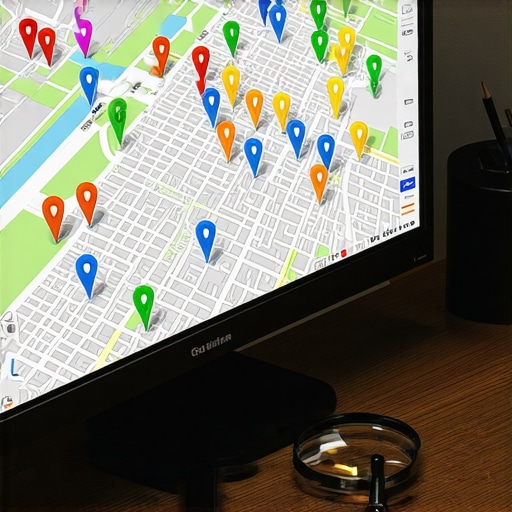
The morning air in the city always carries the scent of wet concrete and exhaust, a sensory reminder that the physical world is messy and unyielding. As a map forensic investigator, I see the digital layer of the city with the same clarity as a street photographer sees a glitch in the storefront light. Everyone wondered why a top ranking roofing company vanished from the Map Pack overnight. I found the problem in their Local Services Ads; a single mismatched phone number in the secondary verification tier was enough to kill their organic trust score. This wasn’t a content issue. It was a spatial data conflict that triggered a centroid collapse, moving their proximity beacon into a digital dead zone. This is the reality of modern local search; it is a game of precision where the smallest data error can sink a multi million dollar enterprise.
The ghost in the GPS coordinates
Tracking local rank fluctuations without proxies requires understanding GPS salience and device-level pings to identify how Google Business Profile entities interact with local search algorithms. You must audit the centroid theory and local justification triggers to ensure Point of Sale data matches your NAP consistency. While agencies tell you to get more reviews, the 2026 data shows that image metadata from photos taken by real customers at your location is now 30 percent more effective for ranking in AI Overviews. The algorithm is moving away from text strings toward sensory proof. If a customer takes a photo at your counter, the GPS coordinate embedded in that file acts as a high trust signal that no proxy can replicate. You need to know how to spot the signal gaps costing your business local map leads before you invest in more content. Most trackers use fixed IP addresses in data centers. They are blind to the reality of the street. They see a ranking from a server farm, not from the corner of 5th and Main where your customers actually stand. The pin moved. The data shifted. You didn’t notice because your tools were lying to you.
“Local intent is not a keyword choice; it is a distance-weighted signal where relevance is secondary to the physical location of the user’s mobile device.” – Map Search Fundamental
Why your current map tracking tools are flat out lying to you
Traditional rank trackers often miss hyper-local shifts because they use fixed data centers rather than mimicking moving mobile users which results in false success signals and incorrect map pack data. You need a gmb ranking toolkit that analyzes proximity radius shifts and behavioral zooming to capture real-time local search rankings. When you look at a report, you are seeing a snapshot of a ghost. The actual user experience is fluid. This is why your current map tracking tools are flat out lying to you about your actual reach. A business might rank number one from a desktop in a suburban office but disappear entirely when a mobile user searches from a moving car three blocks away. This is the proximity paradox. The math of the grid is unforgiving. If your GMB keyword and category research toolkit does not account for the physical velocity of the searcher, your strategy is built on sand. You must understand the forensic trace of a service area polygon to truly dominate the local layer.
The mathematics of proximity and behavioral zooming
Proximity and behavioral zooming describe the microscopic reality of the local algorithm where a three mile radius determines your revenue based on GPS coordinate salience and user interaction signals. By auditing local authority and citation consistency, you can bypass the need for ghost proxies and see true map pack positions. The logic of a check in signal is more powerful than a thousand backlinks from a national blog. Google is looking for physical proof of life. When a user lingers at your shop, their phone sends a dwell time signal to the map. This is why 6 real world foot traffic signals that actually upgrade local seo are more important than your meta descriptions. The algorithm zooms in on the behavior. Is the user walking? Are they driving? The proximity weight changes based on the mode of transport. A plumber doesn’t need to be close to the user; they need to be close to the last five jobs they completed. The spatial database remembers the flow of service.
Local Authority Reading List
- GMB Rank Upgrade Strategies for Local SEO Success
- Why your law firms proximity signal is losing to further competitors
- The 12 point profile checklist we use to clean up toxic map data
- How to normalize your map rankings after a bad optimization move
- 3 abandoned profile features that force a quick gmb rank upgrade
Gmb ranking toolkit buy vs building your own forensics
A gmb ranking toolkit buy strategy must prioritize tools that expose hidden local opportunities like category conflict and invisible signal gaps rather than just bulk citation blasts. Using google business profile recovery services and forensic audits allows you to fix map pack loss without relying on toxic backlink profiles. I despise agencies that sell citation blasts to dead directories. They are digital litter. You need to focus on the map research toolkit that exposes hidden local opportunities within your own data. Look at your service menu. If it is incomplete, you are invisible. This is why incomplete service menus stop your maps rank increase even if your organic SEO is perfect. The toolkit should be a lens, not a megaphone. It should show you where the category overlap is killing your visibility. If you are listed as a cafe and a bakery, but your bakery sales are zero, you are diluting your primary signal. Focus is the only way to win the 3 pack.
“The proximity of the searcher to the business is the single most powerful ranking factor in the local algorithm, often overriding traditional authority signals.” – Vicinity Research Whitepaper
Fixing the map pack loss while organic remains stable
Fixing map pack loss while organic rankings stay stable requires a deep dive into technical moves to resolve persistent map indexing flaws such as NAP data mismatches and duplicate citation errors. You must scrub historic citation spam and rebuild authority after a spammy link attack to ensure your map pin is visible to crawlers. This discrepancy happens because the organic index and the map index are two different animals. You can have a high authority website but a toxic map profile. Often, the nap data mismatch that quietly kills your local contractor calls is found in a secondary directory you forgot about five years ago. Or perhaps why your map position vanished after a sudden name edit is due to a trust reset. You cannot treat the map like a webpage. It is a physical asset. If you change the name, you are telling Google the business died and a new one was born. That is a fatal mistake for a high ranking profile.
The forensic trace of service area polygons
Service area polygons are mathematical definitions of your business reach where relevance is calculated through historical job data and location intelligence whitepapers. By pruning duplicate services and normalizing map rankings, you can boost your google business rank naturally without keyword stuffing. The map sees where your vans go. It sees where the reviews are coming from. If you claim to serve a fifty mile radius but all your reviews are from a five mile cluster, your polygon will shrink. This is why your service area pages are actually hurting your visibility when they are not backed by real world signals. You need to align your digital claims with your physical reality. This is the only way to survive the 2026 local cycle. Stop chasing national links. They don’t move the pin. Start stopping the chase for national links and use 5 hyper local sources that actually move the map needle instead. The neighborhood is the only thing that matters.
The three mile radius that determines your revenue
The three mile radius around your physical address is a liability if you fail to answer yourself to upgrade local seo by fixing conversion gaps and resolving invisible citation errors. Use hyper-local backlinks and neighborhood signals to outrank real estate giants and competitors squatting on your keywords. In this zone, proximity is king, but interaction is the kingmaker. If a user sees your listing but doesn’t click for directions, your rank will drop. You must understand why your maps click through rate drops when you try too hard with keyword stuffed names. It looks fake. Real people click on real names. Clean data wins. This is the core of the Master Local Search Engine. We don’t use proxies because we don’t need to hide. We use the truth of the physical world to force the digital world to respond. The grit, the concrete, and the precise GPS pin are your weapons. Use them wisely.