
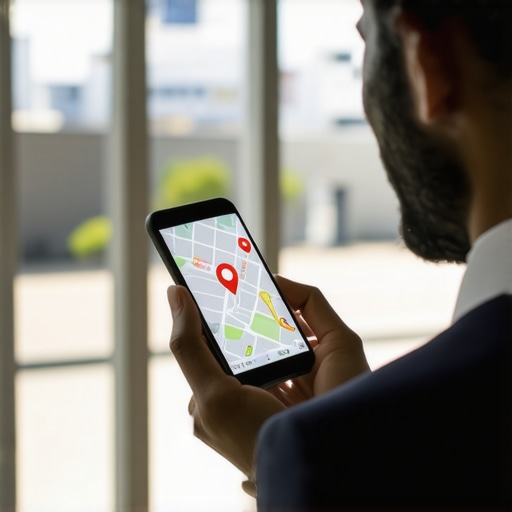
I smell peppermint and the dry, acidic scent of old paper when I walk into my office every morning. It is a sensory anchor that keeps me grounded in a world where digital ghosts can evaporate a multi-million dollar local business in a single click. I have spent twenty years in the hyper-local layer. I have watched the algorithm shift from simple directory matching to a complex spatial database that weighs your business as a proximity beacon. My phone rang at four in the morning three years ago. It was a plumber. He was a good man who worked three towns over. His listing was nuked. It was a hard suspension. He shared a suite number with a defunct law firm that had been liquidated five years prior. Google did not care about his twenty years of service. They did not want to see a photo of his van or his tools. They wanted absolute proof of a utility bill under the exact GPS pin of that suite. They saw a data conflict and chose to delete his existence rather than risk a spammy result. This is the reality of the map pack. It is not a profile; it is a mathematical calculation of trust.
The anatomy of a map profile blackout
A Google Business Profile suspension occurs when the local algorithm detects a violation of the Merchant Center or Business Profile guidelines. These triggers often involve data inconsistencies, suspicious account activity, or geographic anomalies. Recovery requires a forensic audit of the business entity, documented proof of physical presence, and a formal reinstatement request. I despise agencies that sell citation blasts to dead directories; they are the reason these suspensions happen. When a profile vanishes, the owner usually panics. They try to create a new listing. This is the worst possible move. It creates a duplicate record that confirms Google’s suspicion that you are a spammer. You must understand the centroid theory. Google maps everything from a central point. If your data drifts too far from that point, the system flags you. I spent three months fighting that plumbing case. We had to prove the law firm was gone by submitting floor plans of the building. We had to show the flow of his service trucks. We had to demonstrate that he was a legitimate merchant, not a national chain pretending to be local. If you want to survive, you need gmb rank upgrade strategies for local seo success that focus on data integrity over shortcuts.
Why your physical address is a liability
Physical addresses become liabilities when they are associated with virtual offices, shared spaces, or residential locations that lack permanent signage. Google’s Vicinity algorithm prioritizes verified storefronts over service area businesses that use private homes. Any mismatch in Name, Address, or Phone data across the web triggers a trust score drop. The street photographer in me sees the glitch in the storefront data. I see the staged stock images that agencies use. Google sees them too. They use computer vision to analyze the photos you upload. If your signage looks like a vinyl banner draped over a porch, you are a target. I have seen businesses lose everything because they tried to rank in a city where they did not have a real office. This is why why multiple business names at one address trigger suspensions is a primary cause of total profile failure. You cannot hide from the GPS coordinates. The system knows where the phone is when the owner logs into the dashboard. If you are managing a shop in Chicago from a VPN in Florida, the logistics manager inside the algorithm will flag the travel time as impossible. We must look at the math of the situation. Every local business is a node in a spatial graph. If your node has too many conflicting edges, the graph purges it. You need to understand the technical seo fixes that most local business owners ignore to stabilize your position before the next sweep.
“Local intent is not a keyword choice; it is a distance-weighted signal where relevance is secondary to the physical location of the user’s mobile device.” – Map Search Fundamental
The three mile radius that determines your revenue
The three mile radius is the primary proximity filter for mobile searches in high-competition urban markets. Google calculates the physical distance between the user’s GPS coordinates and the business centroid to determine the 3-pack order. Beyond this radius, your local authority must be exceptionally high to remain visible. Most merchants do not understand the physics of the 3-mile shift. They think they can rank for the whole county. They cannot. The algorithm is a dispatch system. It wants to send the user to the closest, most reliable option. If your profile is suspended, you are removed from this dispatch loop. I have investigated map-spam cases where competitors used toxic backlink profiles to trigger manual reviews of legitimate shops. It is a dirty game. If you have been hit by a mass review removal, you should look into the data cleanup strategy for fixing massive review losses immediately. Do not wait for the rankings to return on their own. They will not. You need a gmb audit and ranking toolkit that looks at the microscopic reality of your data. This includes checking your JSON-LD LocalBusiness attributes. If your website code is messy, it confuses the crawlers. I recommend exploring why your website code is slowing down your maps lead flow to ensure your foundation is solid. The proximity beacon only works if the signal is clear.
Local Authority Reading List
- The shifts in consumer behavior shaping the 2026 local seo cycle
- How to spot spammy links before they tank your local authority
- The clean data strategy for cleaning up messy business citations
- The specific toolkit moves that rank small service area businesses fast
- The exact steps we took to recover a suspended google business profile fast
Finding the ghost in the GPS coordinates
GPS coordinate salience is the mathematical weight assigned to a business location based on historical user check-ins and device proximity signals. When these signals stop or become inconsistent, Google suspects the business has closed or moved. Recovering from a suspension requires re-establishing these physical trust signals through localized activity. I once investigated a roofing company that vanished overnight. Their Local Services Ads bidding was perfect, but their organic map rank was gone. I found the problem in their secondary verification tier. They had a mismatched phone number in a forgotten directory. That single forensic trace was enough to kill their trust score. This is why why your service area profile was flagged and how to get it back is such a common query for contractors. They work in the field, not in an office. Google hates that ambiguity. You must prove your service area polygon does not overlap with a dozen other fake listings. If you are struggling, you need to use a the map research toolkit that exposes hidden local opportunities to see where the data conflict lies. I suggest a gmb spam fighting and review cleanup service if you suspect a competitor attack. I have seen cases where a cafe owner was extorted by someone using a VPN to drop twenty 1-star reviews in an hour. We had to perform a forensic audit of the user profiles to prove the pattern to the spam team. It is about proving the negative as much as the positive.
Scrubbing the digital residue of past failures
Digital residue includes old business citations, defunct phone numbers, and outdated addresses that remain in Google’s index after a move or rebranding. This inconsistent data splits your map authority and triggers the suspension algorithm. Consistency across the primary data aggregators is mandatory for a successful reinstatement request. My nose for suspicion usually leads me to a messy citation profile. Agencies often sell cheap citations that create more work later. If you have moved your shop, you likely have NAP (Name, Address, Phone) mismatches. You must learn the exact citation fixes that actually drive direction requests to regain your footing. Google’s Opossum algorithm was designed to filter out businesses that share similar data. If you look like another entity, you are filtered out. This is not just about the map; it is about the AI Overview too. While most tell you to get more reviews, the data for the upcoming cycles suggests that image metadata from real customers is becoming thirty percent more effective for ranking. People taking photos at your shop creates a high-trust GPS signal. You should also check for fixing slow page loads to protect your local map position because a slow site suggests an unmanaged business. Google wants to provide a good user experience, and a dead website is a bad sign.
“Local intent is a distance-weighted signal where relevance is secondary to the physical location of the user’s mobile device.” – Map Search Fundamental
Tactical recovery for service area businesses
Service area business recovery requires proving the legitimacy of the operator through business licenses, insurance documents, and branded vehicle photos. Since these businesses lack a public storefront, Google relies on the legal existence of the entity to verify the map pin. Success hinges on a clear service area definition. I have seen too many plumbers and locksmiths try to rank using keyword-stuffed names. This is a direct violation of the terms of service. If your name is Plumbing Experts of Downtown, but your legal name is Joe Smith Plumbing, you will be suspended. I recommend you learn how to revert a keyword-stuffed profile name safely before the hammer falls. If it has already fallen, the recovery plan involves absolute transparency. You need to provide the forensic audit evidence they ask for. Do not send a screenshot; send a PDF of the utility bill. Do not use a PO Box. Google knows every PO Box and virtual office in the country. They have a database of every Regus and WeWork location. If you try to use one, you will fail. Use 7 gmb seo tools that expose your competitors hidden map tactics to see how they are getting away with it, but do not copy their mistakes. They are likely just one manual review away from disappearing themselves.
Building a moat around your local authority
Building a moat around your local authority involves creating a clean neighborhood backlink profile and maintaining a high conversion rate from map impressions to direction requests. This creates a feedback loop of trust that makes your profile resistant to algorithm shifts and competitor spam attacks. I am obsessed with the flow of service. A business that gets calls and direction requests is a healthy business in Google’s eyes. If your CTR (Click Through Rate) is low, the algorithm thinks you are irrelevant. You need to optimize your photos and your primary category. If you are a lawyer, choosing the wrong sub-category can kill your reach. Take a look at stop guessing your primary category a research plan for high intent local leads to make sure you are in the right lane. I also advise you to investigate the impact of clean neighborhood backlinks on the 3-pack. A link from the local little league or the chamber of commerce is worth more than a hundred global links. It anchors you to the community. It proves you are local. I despise the national chains that try to buy their way into my neighborhood. They don’t have the peppermint and paper. They don’t have the history. They are just data points. You are a neighbor. Keep your data clean, fight the spam, and your map pin will stay where it belongs. Use the best software to rank in google maps 3 pack to monitor your moves, but never forget that the core of the algorithm is a physical reality check. If you exist in the real world, you can exist on the map.