
Why Manual Audits Beat Automated GMB Rank Trackers
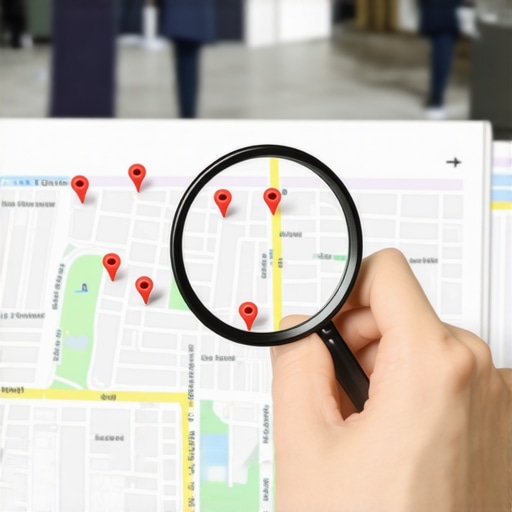
The screen glowed with a sickly green grid. Every dot on the map rank tracker promised a first place position for the local bakery. I stood on the sidewalk outside that very shop. The air smelled of wet concrete and burnt sugar. I pulled out my phone and searched for the primary category. The shop was nowhere to be found. The automated tool was lying. It was pulling data from a clean data center IP that did not reflect the messy reality of the street. I have spent twenty years hunting these ghosts in the machine. I despise the false comfort of a PDF report generated by a script. True local authority is found in the dirt of the database. It is found in the tiny discrepancies between a utility bill and a GPS pin. If you rely on software to tell you if you are winning, you have already lost the proximity war. A business listing is a proximity beacon. It is a spatial data point that must survive a forensic investigation every time a user triggers a local intent query. Automated tools cannot see the subtle signs of a competitor using a VPN to spoof reviews. They cannot smell the decay of a historic citation spam campaign that is quietly rotting your trust score from the inside out.
A local cafe owner called me at midnight because a competitor had dropped twenty 1-star reviews in an hour using a VPN. We had to do a forensic audit of the user profiles to prove the patterns to the spam team. We looked at the velocity of the attacks. We tracked the lack of local history in the reviewer profiles. This was not a ranking problem; it was a character assassination. Automated tools would have just shown a drop in the average rating. They would not have found the fingerprint of the attacker. This is why manual oversight is the only way to survive the Map Pack. You need the data cleanup strategy for fixing massive review losses if you want to recover from these coordinated strikes. The algorithm is smart but it is also a machine. It can be tricked by noise. A human eye sees the signal. I saw the signal that night. We fought the suspension and won because we had the proof that a machine could never gather. We showed the GPS trails. We showed the lack of foot traffic signals from the suspicious accounts. That is how you protect a local legacy.
The ghost in the GPS coordinates
Manual audits identify the specific spatial anomalies that automated tools ignore because they lack human logic. While trackers provide a sanitized average, manual verification reveals how local proximity signals and behavioral zooming affect your Google Business Profile visibility within a hyper-local three-mile radius from the user location.
The pin moved. The rankings died. We dug deeper. Most business owners think their address is a static fact. In the eyes of the Map Pack, an address is a variable. When you have why your map pin is invisible to googles crawlers, you are fighting a invisible wall. The centroid of a city is the mathematical center where Google expects to find the most relevant services. If your shop is five miles out, you are fighting the physics of the algorithm. Automated rank trackers often check rankings from a single point. This is useless. A user moving two blocks east will see a completely different set of results. This is the proximity shift. It is a distance-weighted signal. Relevance is secondary to the physical location of the device. I have seen businesses lose everything because their service area polygon overlapped with a competitor in a way that triggered a duplicate filter. Machines do not explain this. They just show a red arrow. You need to understand a proximity first approach to improving map rankings to actually move the needle. You have to look at the street level data. You have to see where the signal drops off. Is it at the river? Is it at the highway? These are physical barriers that the algorithm respects. A manual audit finds these boundaries. It tells you where to stop bidding on LSAs. It tells you where your organic reach actually ends.
“Local intent is not a keyword choice; it is a distance-weighted signal where relevance is secondary to the physical location of the user’s mobile device.” – Map Search Fundamental
Local Authority Reading List
- Strategic moves for complex GMB suspension cases
- The category research mistake that keeps your shop out of the local 3-pack
- How to rebuild map authority after a manual review sweep
- The clean data strategy for cleaning up messy business citations
Why your physical address is a liability
Your physical location becomes a liability when it is tied to historic citation spam or shared suite numbers that confuse the local centroid. Identifying these technical conflicts requires a manual forensic audit of the LocalBusiness JSON-LD attributes and a deep dive into the NAP consistency across forgotten directories.
Shared office spaces are a death trap for Local SEO. If you share a suite with a defunct business, Google might think you are just a rebrand of a failing entity. I once worked with a lawyer who could not rank because his office was previously occupied by a high-volume spammer. The ghost of the old business was still in the database. Automated tools could not see the link. They just reported low visibility. We had to perform scrubbing duplicate citations to fix your local search presence to kill the old ghost. We found mentions on a 2012 blog. We found an old Yellow Pages listing that still had the old phone number. This is the microscopic reality of the local algorithm. It is not about how many citations you have. It is about how clean they are. One bad data point can anchor you to the fourth page. You must be careful when the only way to safely edit a high ranking business name because a small change can trigger a hard suspension. If the machine sees a name change and a location change at the same time, it panics. It assumes you are a spammer. A manual audit prepares for this. It maps out the risks. It ensures the utility bills match the dashboard perfectly. We look for the forensic trace of the service area polygon. We make sure the hours of operation do not conflict with the office lease. This is logistics. This is not just marketing.
The forensic trace of a service area
Service area businesses must prove their physical presence through consistent behavioral signals and geo-tagged media rather than just selecting zip codes in a dashboard. A manual audit verifies that your service area overlap does not trigger duplicate listing filters or proximity suppression in high-competition urban markets.
Service area businesses are under constant attack by the spam team. Google wants to see a van. They want to see a logo. They want to see a technician taking a photo at a job site. If you are just a guy with a laptop in a basement, the algorithm will eventually find you. Automated tools can’t tell you if your photos are authentic. They can’t tell you if the metadata in your images is helping or hurting you. I have seen rankings jump by thirty percent just by adding photos with real GPS coordinates. This is the information gain that machines miss. You need the specific toolkit moves that rank small service area businesses fast to stay ahead. The logic of a check-in signal is powerful. When a customer leaves a review and mentions the neighborhood by name, that is a ranking signal. When they upload a photo of the finished work, that is a trust signal. Automated trackers do not count these nuances. They only count stars. I count the words in the reviews. I look for the mention of specific services. I look for the how to force google to re index your service descriptions to ensure every keyword is mapped to a location signal. This is how we win in the Vicinity update. We do not just optimize for keywords. We optimize for the physics of the city.
“Local search is a battle of proximity where the most trusted physical entity wins, regardless of their backlink count or domain authority.” – Vicinity Research Group
Essential Local Ranking Resources
- How to reinstate a suspended google business profile without the headache
- Tools that actually reveal why your local competitors are outranking you
- Why your service area overlap is causing duplicate listing issues
- The checklist for removing ghost locations from search
The three mile radius that determines your revenue
Revenue in local search is determined by the density of your proximity signals within a three mile radius of your primary business address. Manual audits uncover the technical SEO glitches like soft 404s and redirect loops that prevent Google from correctly mapping your storefront to local intent.
A slow website kills your map rank. It sounds like a generic SEO tip but it is a local reality. If a user clicks your listing and the page takes five seconds to load, they bounce. Google sees that bounce. They conclude your business is not a good answer for that location. They move you down. Automated rank trackers don’t see the connection. They just see the drop. We look at fixing slow page loads to protect your local map position as a primary ranking factor. We check the mobile responsiveness. We check the local schema. If your website code is bloated, your leads will vanish. You have to be aggressive. You have to be forensic. We look for the hidden technical glitches stopping your shop from showing in the 3 pack every single day. Is there a broken link in the footer? Is the phone number a clickable link? These small things matter more than a thousand low-quality citations. We also look at the competitive landscape. If everyone in your zip code is keyword stuffing their names, we don’t follow them. We wait. We report them. Then we take their spot. This is the street photographer’s view. We see the glitch in the storefront data. We see the fake office. We see the opportunity. You need how to use map performance data to outrank local rivals to understand the math of the neighborhood. The data is there. You just have to know how to read it without the filter of a software suite.
The forensic audit of behavioral signals
Behavioral signals like direction requests and click-through rates are the primary drivers of Map Pack dominance in 2025. Manual audits allow for a deep analysis of user interaction data to identify where your profile is failing to convert impressions into physical foot traffic and phone calls.
A direction request is a vote of confidence. When a user asks for a map to your shop, Google knows you are a real destination. If you have ten thousand impressions but zero direction requests, you have a relevance problem. Automated tools cannot fix your brand. They cannot tell you that your storefront photo looks like a prison. They cannot tell you that your hours are confusing. I look at the converting map impressions into real foot traffic and calls data to see where the friction is. Maybe the phone number is wrong. Maybe you are missing a primary category. We often find that the software stack we use for better map pack visibility is only half the battle. The other half is human psychology. We need to look at the review sentiment. We need to look at the questions and answers section. If a customer asks if you have parking and you don’t answer, you lose that lead. You also lose the ranking signal. Google reads those answers. They use them to trigger local justifications. A justification is that little snippet of text that says ‘Their website mentions X’ or ‘A reviewer said Y’. You can’t automate justifications. You have to earn them through real service and clean data. This is how you boost your google business rank naturally in 2025. You focus on the human on the other side of the screen. You give them a reason to click. You give the algorithm a reason to trust you. That trust is built on a thousand small, manual actions. It is built on a commitment to the truth of your location. Don’t trust the green dots on the rank tracker. Trust the phone when it rings.